Table of Contents
- Why Yearly Goal Setting Matters
- What Is a Goal Setting Worksheet?
- Step 1: Reflect on Where You Are
- Step 2: Define Your Priorities
- Step 3: Set Clear, Meaningful Goals
- Step 4: Break Goals Into Milestones
- Step 5: Create a Weekly Action Plan
- Step 6: Use Your Planner for Consistency
- Goal Planning Framework
- Goal Setting Checklist
- How to Use Your Printable
- How to Connect Your Worksheet to Your Planner
- Tips for Staying Consistent
- Key Takeaways
- FAQs
Setting meaningful goals for the year starts with clarity—but achieving them requires a plan. Using a thoughtfully designed goal setting worksheet can help you move from intention to action by breaking big ideas into manageable, consistent steps.
Instead of setting goals that feel overwhelming or unrealistic, this guide will walk you through how to create a simple, intentional system that works with your daily and weekly planner—so you can stay focused and make steady progress throughout the year.
Why Yearly Goal Setting Matters
Taking time to set goals for the year helps you move forward with purpose instead of reacting to your schedule.
When you approach goal setting intentionally, you:
- Gain clarity on what matters most
- Stay aligned with your priorities
- Reduce overwhelm by focusing on fewer, meaningful goals
- Build consistent habits over time
A strong system begins with a clear plan—and that’s where a goal setting worksheet becomes essential.
What Is a Goal Setting Worksheet?
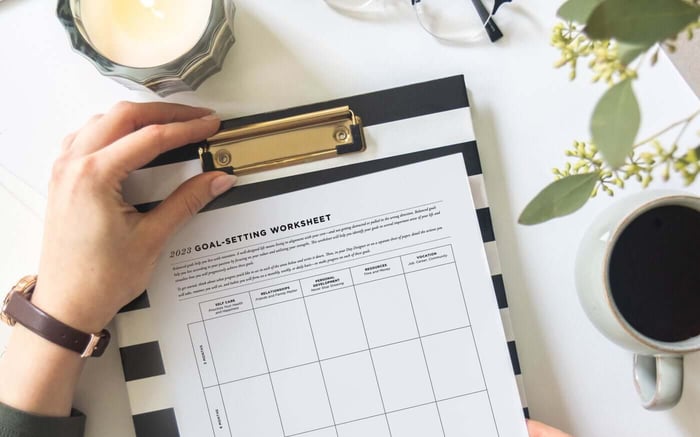
A goal setting worksheet is a structured tool designed to help you organize your goals, define your priorities, and map out the steps needed to achieve them.
Instead of keeping everything in your head, it gives you a dedicated space to:
- Write down your goals
- Break them into smaller steps
- Track progress over time
This creates clarity and helps you stay focused on what truly matters.
Step 1: Reflect on Where You Are
Before setting new goals, take time to reflect.
Ask Yourself:
- What went well this past year?
- What challenges did I face?
- What do I want to change?
Reflection helps you create goals that are aligned with your current season of life.
Step 2: Define Your Priorities
Your goals should reflect what matters most—not just what feels urgent.
Focus Areas to Consider
- Personal growth
- Relationships
- Health and well-being
- Career or education
- Time and financial management
Clarity around your priorities makes your goals more meaningful and sustainable.
Step 3: Set Clear, Meaningful Goals
Choose a small number of goals that feel realistic and aligned.
Goal-Setting Tips
- Be specific about what you want to achieve
- Focus on 3–5 key goals
- Make them measurable and actionable
A focused approach increases your chances of success.
Step 4: Break Goals Into Milestones
Big goals become manageable when broken into smaller phases.
Example
- Goal: Improve time management
- Milestones:
- Establish weekly planning routine
- Implement daily priorities
- Review progress monthly
This is where your goal setting worksheet becomes especially useful.
Step 5: Create a Weekly Action Plan
Your yearly goals are achieved through weekly action.
Weekly Planning Steps
- Review your goals
- Choose top priorities for the week
- Assign tasks to specific days
Breaking your goals into weekly actions keeps them realistic and achievable.
Step 6: Use Your Planner for Consistency
Your planner is where your goals come to life.
Using a Weekly Planner
- Map out your priorities for the week
- Schedule time for important tasks
- Keep your focus on what matters most
Using a Daily Planner
- Choose your top 3 tasks each day
- Break down larger tasks into smaller steps
- Track progress and adjust
Your goal setting worksheet provides the big picture, while your planner helps you execute consistently.
Goal Planning Framework
| Level | Focus | Example |
|---|---|---|
| Yearly | Big-picture goals | Improve health |
| Monthly | Progress tracking | Workout routine |
| Weekly | Action steps | 3 workouts/week |
| Daily | Execution | 30-minute workout |
Goal Setting Checklist
Use this checklist to guide your process:
- ☐ Reflect on the past year
- ☐ Define your priorities
- ☐ Set 3–5 meaningful goals
- ☐ Break goals into milestones
- ☐ Plan weekly actions
- ☐ Use your planner daily
- ☐ Track progress and adjust
How to Use Your Printable
Your printable acts as your central planning tool.
Use it to:
- Capture your goals in one place
- Break them into actionable steps
- Keep your priorities visible
- Stay aligned throughout the year
A well-designed goal setting worksheet helps you stay focused without feeling overwhelmed.
How to Connect Your Worksheet to Your Planner
The most effective way to achieve your goals is to integrate your worksheet with your planner.
Weekly Integration
- Review your worksheet at the start of each week
- Choose your top 3–5 priorities
- Schedule them into your planner
Daily Integration
- Select your top 3 tasks
- Focus on completion, not perfection
- Adjust based on your schedule
Why This Works
- Your worksheet holds your vision
- Your planner drives your action
Together, they create a system that supports long-term success.
Tips for Staying Consistent
Consistency is what turns goals into results.
Keep It Simple
Avoid overloading your plan with too many goals.
Be Flexible
Adjust your plan when needed.
Focus on Progress
Small steps add up over time.
Review Regularly
Weekly check-ins help you stay aligned.
Key Takeaways
- A goal setting worksheet helps turn ideas into actionable plans
- Breaking goals into smaller steps reduces overwhelm
- Weekly and daily planning create consistency
- A simple, intentional system leads to long-term success
-
Free Goal-Setting Worksheet Printable

$ 0.00
To find balance in the year ahead, it’s important to set goals across five important life sectors: Self-Care, Relationships, Personal Development, Resources, and Vocation. Our free Goal Setting Worksheet printable enables you to identify your goals and visualize how you… read more

FAQs
What is a goal setting worksheet?
A goal setting worksheet is a tool that helps you organize your goals, break them into steps, and track progress over time.
How do I use a goal setting worksheet effectively?
Start by defining your goals, breaking them into milestones, and using your planner to schedule weekly and daily actions.
How many goals should I set for the year?
Focus on 3–5 meaningful goals to avoid overwhelm and stay consistent.
How do I stay consistent with my goals?
Use a weekly planning routine, keep your system simple, and review your progress regularly.
Can I use this with a daily or weekly planner?
Yes. Your worksheet provides the big picture, while your planner helps you execute your plan step by step.