Table of Contents
If you’ve ever felt like your day gets away from you, you’re not alone. One of the most effective ways to take control of your schedule is by learning what is time blocking and how to use it consistently.
Time blocking is a simple planning method that helps you assign specific periods of time to your tasks, priorities, and routines. Instead of reacting to your day, you create a clear plan for how your time is spent—helping you stay focused, organized, and intentional.
This guide will walk you through exactly how to use time blocking, how it fits into your daily or weekly planner, and how to get started with a free printable.
What Is Time Blocking?
At its core, what is time blocking comes down to planning your day in advance by assigning tasks to specific time slots.
Instead of keeping a long, open-ended to-do list, you:
- Decide what needs to get done
- Assign each task a time
- Follow your schedule throughout the day
This method turns your planner into a clear roadmap for your time.
Why Time Blocking Works
Understanding what is time blocking is only part of the equation—knowing why it works is what makes it effective.
Benefits of Time Blocking
- Helps you stay focused on one task at a time
- Reduces decision fatigue
- Prevents over-scheduling
- Creates realistic expectations for your day
- Builds consistent routines
By giving every task a place in your day, you reduce overwhelm and increase clarity.
How to Start Time Blocking
Getting started doesn’t require a complicated system—just a few intentional steps.
Step 1: List Your Priorities
Identify your top tasks for the day or week.
Step 2: Estimate Time
Decide how long each task will realistically take.
Step 3: Assign Time Blocks
Schedule each task into your planner.
Step 4: Add Breaks and Flex Time
Leave room for transitions and unexpected changes.
Step 5: Follow and Adjust
Use your schedule as a guide, not a rigid rule.
This is the foundation of understanding what is time blocking in a practical way.
Time Blocking vs To-Do Lists
A traditional to-do list tells you what to do—but not when to do it.
| Method | Focus | Limitation |
|---|---|---|
| To-Do List | Tasks | No time structure |
| Time Blocking | Tasks + time | Requires planning |
Time blocking bridges the gap by turning tasks into scheduled actions.
How to Use Time Blocking in Your Planner
Time blocking becomes most powerful when used inside your planner.
Using a Daily Planner
Daily planners are ideal for detailed time blocking.
How to apply:
- Write your schedule hour-by-hour
- Assign tasks to specific time slots
- Highlight your top priorities
Example Flow:
- Morning → Focus work
- Midday → Meetings or admin
- Afternoon → Lighter tasks
This approach gives you structure and clarity throughout your day.
Using a Weekly Planner
Weekly planners help you see your time at a higher level.
How to apply:
- Block time for major categories (work, personal, errands)
- Assign key priorities to specific days
- Leave space for flexibility
Weekly planning ensures your schedule aligns with your bigger goals.
Why This Works
- Your weekly planner sets direction
- Your daily planner executes the plan
Together, they create a system that supports consistent productivity.
Time Blocking Example
| Time Block | Activity |
|---|---|
| 8:00–9:00 AM | Morning routine |
| 9:00–11:00 AM | Deep work / focus tasks |
| 11:00–12:00 PM | Meetings |
| 12:00–1:00 PM | Lunch |
| 1:00–3:00 PM | Project work |
| 3:00–4:00 PM | Admin tasks |
| Evening | Personal time |
Time Blocking Checklist
Use this checklist to get started:
- ☐ List your priorities
- ☐ Estimate how long tasks will take
- ☐ Assign time blocks
- ☐ Add breaks and buffer time
- ☐ Review your schedule
- ☐ Adjust as needed
How to Use the Free Printable
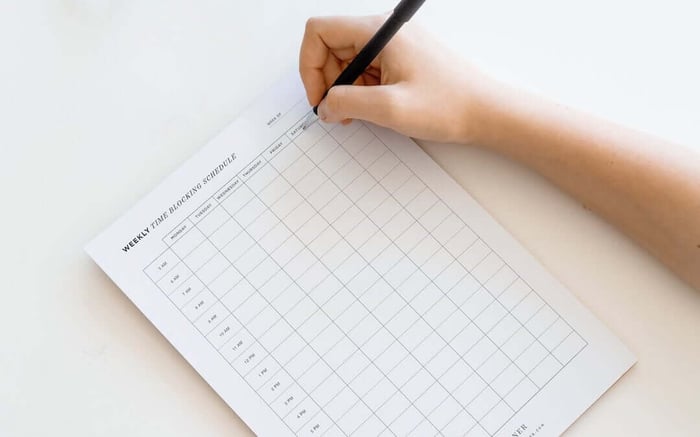
The free time blocking printable makes it easy to visualize your day.
Use it to:
- Map out your schedule hour-by-hour
- Identify priority blocks
- Stay focused throughout the day
- Track how your time is spent
Pairing the printable with your planner creates a system that is both structured and flexible.
Tips for Staying Consistent
Time blocking works best when it feels realistic.
Keep It Simple
Start with a few key blocks instead of planning every minute.
Be Flexible
Adjust your schedule when things change.
Prioritize What Matters
Focus on your most important tasks first.
Review Daily
Check in with your schedule and refine as needed.
Consistency—not perfection—is what makes time blocking effective.
Key Takeaways
- Learning what is time blocking helps you take control of your schedule
- Assigning time to tasks increases focus and productivity
- Daily planners support execution, while weekly planners provide direction
- A simple, flexible system leads to consistent results
FAQs
What is time blocking?
Time blocking is a planning method where you assign specific time slots to tasks, helping you stay focused and organized.
How do I start time blocking?
Start by listing your priorities, estimating time, and scheduling tasks into your planner.
Is time blocking better than a to-do list?
Time blocking adds structure by assigning tasks to specific times, making it more effective for managing your day.
Can I use time blocking in a weekly planner?
Yes. Weekly planners help you block time for priorities across your week, while daily planners provide detailed scheduling.
How do I stay consistent with time blocking?
Keep your schedule realistic, review it daily, and adjust as needed.
Free Time Blocking Schedule Printable

$ 0.00
Time blocking is a popular time management tool that groups similar tasks into blocks of time to help effectively plan your day and maximize productivity. Visualize your plans with this Weekly Time Blocking Schedule printable. For step-by-step guidance on… read more